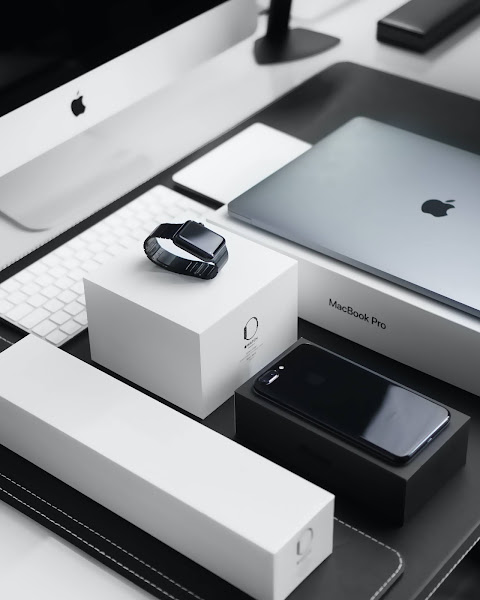
A company started with a $1,300 investment in a garage is now worth more than the GDP of most countries. Apple Inc. has a market capitalisation that crossed $3.5 trillion in 2025 — making it one of the most valuable companies ever built. Its brand alone is worth $1.3 trillion, ranking it the most valuable brand on the planet for four consecutive years according to Kantar BrandZ.
But market caps and brand rankings don’t explain the deeper question: why do people genuinely love Apple products in a way they simply don’t love most other companies? Why does a new iPhone announcement still fill news cycles? Why does switching away from Apple feel harder than switching between almost any other tech platform?
The answer is a combination of product philosophy, design discipline, ecosystem strategy, and one of the most compelling corporate stories in business history.
Apple’s Journey — From a Garage to $3.5 Trillion
Apple Computer Company was founded on April 1, 1976 by Steve Jobs, Steve Wozniak, and Ronald Wayne. Their first product — the Apple I, a hand-built computer designed entirely by Wozniak — was funded by Jobs selling his Volkswagen Bus and Wozniak selling his HP calculator. Together they raised $1,300.
Within five years, annual revenue had grown from $775,000 to $118 million. The Apple II became a commercial sensation. Then came the Macintosh in 1984 — the first mass-market personal computer to use a graphical user interface and mouse, launched with a $1.5 million Super Bowl advertisement directed by Ridley Scott that is still studied in marketing courses today.
Then Apple nearly collapsed.
Jobs was forced out of the company he co-founded in 1985 following a boardroom struggle. Over the next decade, Apple drifted — releasing products that didn’t sell, burning through CEOs, and watching its stock sink to single digits. By 1997, most industry observers assumed it was finished.
What happened next is one of the most dramatic corporate reversals in history. Jobs returned as CEO, immediately cut Apple’s product line from dozens of confused offerings down to four, and began what became an unbroken run of category-defining products: the iMac, iPod, iTunes, iPhone, iPad, MacBook Air, Apple Watch, AirPods, and now the M-series chip family. Each of those launches reshaped its respective market.
By 2018, Apple became the first publicly traded US company to reach a $1 trillion market capitalisation. It crossed $2 trillion in 2020, $3 trillion in 2022, and briefly hit $4 trillion in October 2025.
The Man Behind the Turnaround — Steve Jobs
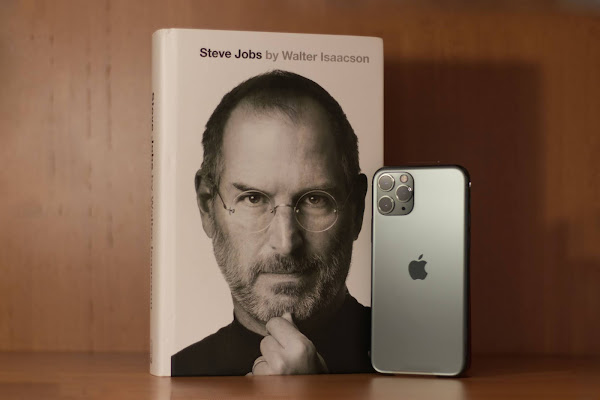
Understanding Apple’s success is impossible without understanding Steve Jobs. He wasn’t a traditional CEO. He was an obsessive, demanding, visionary who held an unusually clear picture of what technology could and should feel like — and pushed everyone around him to match it.
When he returned to Apple in 1997, the company was weeks from bankruptcy. He made a deal with Microsoft, secured emergency funding, eliminated product lines, and rebuilt the company around a simple principle: build fewer things, but make each one extraordinary.
His standards were legendary and often uncomfortable. He insisted on hardware and software working together seamlessly at a time when the industry treated them as separate concerns. He obsessed over elements customers would never consciously notice — the font rendering, the weight of a device, the sound a hinge made when closing. He believed that people didn’t know what they wanted until you showed them something that changed how they thought about the possible.
After a diagnosis of pancreatic cancer, Jobs resigned as CEO on August 24, 2011. He passed away on October 5, 2011. He left behind a company with more cash on hand than the US Treasury and a product roadmap that his successor Tim Cook has continued to execute and expand.
One of his most quoted lines captures the philosophy he built Apple around:
“The people who are crazy enough to think they can change the world are the ones who do.”
6 Reasons Apple Is So Successful
1. Products That Define Categories Rather Than Join Them
Apple doesn’t typically enter existing markets with a slightly better product. It enters with a product that redefines what the category can be. The iPhone wasn’t a better phone — it was a new idea of what a phone should be. The iPad created a market for large-screen tablets that barely existed before it. The AirPods established what truly wireless earphones should feel and work like. The Apple Watch moved the category from fitness trackers to a health platform.
This approach carries risk — products can fail spectacularly (see: the Newton, the Apple TV’s slow start). But when it works, Apple doesn’t compete for market share in an existing space. It builds the space.
2. The Ecosystem Lock-In
This is Apple’s most durable competitive advantage and the one that’s hardest to replicate. iPhone, iPad, Mac, Apple Watch, AirPods, iCloud, iMessage, FaceTime, AirDrop, AirPlay, Apple Pay, and the App Store all work together in ways that no individual component explains.
The moment you use more than two Apple products, switching costs rise dramatically. Your iMessages don’t come through properly on Android. Your Apple Watch stops working without an iPhone. Your iCloud library requires Apple software to access properly. Your AirPods lose their seamless switching. This isn’t accidental — it’s a carefully designed web of integration that rewards staying in the ecosystem and penalises leaving it.
3. Hardware and Software Built Together
Most technology companies either make hardware (Samsung, Dell, Lenovo) or software (Google, Microsoft). Apple does both — and designs each to work specifically with the other. This is why an iPhone with a lower-spec processor than a comparable Android phone often outperforms it: the software is optimised for the exact hardware it runs on.
The clearest modern example is Apple Silicon — the M-series chips Apple began putting in Macs in 2020. Designed in-house rather than purchased from Intel, these chips deliver performance and battery efficiency that competing laptops still haven’t matched. The M4 MacBook Air gets 18+ hours of real-world battery life while running faster than most professional-grade Windows laptops. This is only possible because Apple controls the entire stack.
4. Design as a Competitive Weapon
Under Jony Ive, who led Apple’s design for over two decades, the company established a design language that became globally recognisable — clean lines, precise materials, minimal branding, and a focus on making devices feel as good as they look. The physical experience of using an Apple product — the weight of an iPhone, the click of a MacBook trackpad, the unboxing — is considered part of the product.
This matters commercially because design has become Apple’s most effective marketing. When someone takes out an iPhone, the product markets itself. When someone opens a MacBook in a coffee shop, the Apple logo on the back is visible to everyone in the room. Apple spends less on traditional advertising per dollar of revenue than most of its major competitors — because its products function as advertisements.
5. Privacy and Security as Brand Pillars
Apple has made user privacy a core part of its brand identity at a time when most of its competitors have built business models that depend on monetising user data. On-device processing for Siri and Apple Intelligence, App Tracking Transparency (which requires apps to explicitly request permission before tracking users across apps), and end-to-end encryption of iMessages and FaceTime calls are genuine product differentiators — not just marketing claims.
This resonates with a growing segment of users who are increasingly uncomfortable with how Google, Meta, and Amazon handle their data. Apple’s position — “we make money selling you hardware and services, not selling your data” — is credible because it’s backed by its actual business model.
6. Services — Apple’s Fastest-Growing Engine
A dimension of Apple’s success that’s less visible but increasingly important: its services business. The App Store, iCloud, Apple Music, Apple TV+, Apple Arcade, Apple Pay, and AppleCare+ collectively generated $26.65 billion in Q2 2025 alone — a 12% year-over-year increase. Services now represent nearly a quarter of Apple’s total revenue and carry significantly higher margins than hardware.
This shift matters strategically. Hardware is cyclical — people replace iPhones every 3-4 years. Services revenue is recurring — subscribers pay monthly or annually regardless of what hardware cycle they’re on. Apple now has over 1 billion paid subscriptions across its services, creating a revenue floor that insulates it from hardware slowdowns.
Apple in Numbers (2025)
- Market capitalisation: ~$3.5 trillion (briefly crossed $4 trillion in October 2025)
- Brand value: $1.3 trillion — #1 globally for 4th consecutive year
- Annual revenue (2025): $416 billion
- Net profit (2025): $112 billion — a new record
- iPhones sold (2025): 247 million — a new record
- Active iPhone units worldwide: 1.5+ billion
- Active paid subscriptions: 1+ billion
Frequently Asked Questions About Apple
Q: Why is Apple so expensive compared to other brands?
A: Apple deliberately positions its products as premium. This isn’t purely about cost of materials — it’s a brand strategy. By never releasing a budget product, Apple maintains the perception that its products are aspirational. The premium pricing also funds the research, design, and manufacturing precision that separates its products from competitors. For many buyers, the longevity of Apple products (iPhones are typically supported for 5-6 years with software updates, compared to 2-3 years for most Android flagships) makes the higher upfront cost more economical long-term.
Q: What is the Apple ecosystem and why does it matter?
A: The Apple ecosystem is the network of Apple devices, software, and services that are designed to work together seamlessly — iPhone, Mac, iPad, Apple Watch, AirPods, iCloud, iMessage, AirDrop, Apple Pay, and more. The more Apple products you own, the more deeply integrated your experience becomes — and the harder it is to switch away. This ecosystem lock-in is Apple’s most significant competitive moat.
Q: Is Apple still the most valuable company in the world?
A: Apple consistently ranks among the top 1-3 most valuable companies globally, competing with Nvidia and Microsoft. Its market cap has fluctuated between $3-4 trillion in 2025, depending on market conditions. It remains the world’s most valuable brand by brand value ($1.3 trillion, Kantar BrandZ 2025).
Q: Who runs Apple now?
A: Apple has been led by CEO Tim Cook since Steve Jobs resigned in August 2011. Cook has expanded Apple’s services business significantly, grown its supply chain efficiency, and overseen the transition to Apple Silicon — while maintaining the design and product culture Jobs established.
Q: What was Steve Jobs’ role at Apple after he was fired?
A: After being forced out in 1985, Jobs founded NeXT (a computer company) and purchased the computer graphics division of Lucasfilm, which became Pixar. Apple acquired NeXT in 1997, which brought Jobs back to Apple. He used NeXT’s operating system as the foundation for macOS. He became interim CEO and then permanent CEO, leading Apple’s most transformative period.
Conclusion
Apple’s success isn’t a mystery — it’s the result of a consistent philosophy applied over decades: build fewer things, make each one exceptional, control the hardware and software together, charge a premium and justify it with quality, and build a network of products and services that make staying in the ecosystem the path of least resistance.
The garage story is real. So is the near-bankruptcy. So is the comeback. What makes Apple remarkable isn’t just the scale of what it has achieved, but that the principles that got it there — obsessive attention to user experience, design as a competitive advantage, and a willingness to rethink entire categories from first principles — are still identifiably the same ones Steve Jobs brought back in 1997.
Have a question about Apple’s products, history, or strategy? Drop it in the comments.